

Introduction
In any vehicle suspension system, springs are the key components that absorb shock, support loads, and keep the ride stable. Among the most common types are leaf springs and coil springs — both serving the same purpose but designed for very different applications.
Understanding their differences helps manufacturers, fleet owners, and distributors choose the right solution for specific vehicles, from heavy-duty trucks to passenger cars and industrial machines.
What Is a Leaf Spring?
A leaf spring is made up of multiple layers (or “leaves”) of flat steel plates stacked together in a curved shape. It connects the axle directly to the vehicle’s frame and supports heavy loads.
Main features:
- Simple and durable design
- Excellent load distribution
- Suitable for high-weight applications
Common uses:
- Heavy-duty trucks and trailers
- Buses and construction vehicles
- Agricultural and mining equipment
Because of their robust structure, leaf springs are ideal for vehicles that carry large payloads or operate on rough terrain where durability matters most.
What Is a Coil Spring?
A coil spring is a helical-shaped component made from high-tensile steel wire. It compresses and rebounds vertically to absorb shocks and vibrations.
Main features:
- Compact and lightweight design
- Smooth ride comfort
- Flexible for independent suspension systems
Common uses:
- Passenger cars and SUVs
- Industrial machinery
- Light trucks and performance vehicles
Coil springs are valued for providing better comfort and control, especially in smaller or performance-oriented vehicles.
Key Differences Between Leaf and Coil Springs
| Feature | Leaf Spring | Coil Spring |
|---|---|---|
| Design | Multiple flat steel plates stacked together | Single helical coil of spring steel |
| Load Capacity | Very high – supports heavy loads | Moderate – for lighter loads |
| Ride Comfort | Stiffer ride, less flexible | Smoother ride, better comfort |
| Applications | Trucks, buses, heavy machinery | Cars, light vehicles, small equipment |
| Maintenance | Simple and easy to service | May require precise fitting |
| Cost | Cost-effective for heavy vehicles | Slightly higher for performance use |
In short:
- Leaf springs = strength and load capacity
- Coil springs = comfort and handling
Performance and Durability Considerations
- Leaf Springs: Offer superior durability and load stability but are heavier and less flexible. They’re often used in suspension setups that prioritize load-carrying performance over comfort.
- Coil Springs: Provide smoother ride quality and more consistent wheel contact, but their smaller form factor can limit load capacity. Ideal for vehicles that prioritize comfort and precision handling.
Both can be further optimized with heat treatment, shot peening, and protective coatings to enhance fatigue resistance and lifespan.
Choosing the Right Type for Your Vehicle
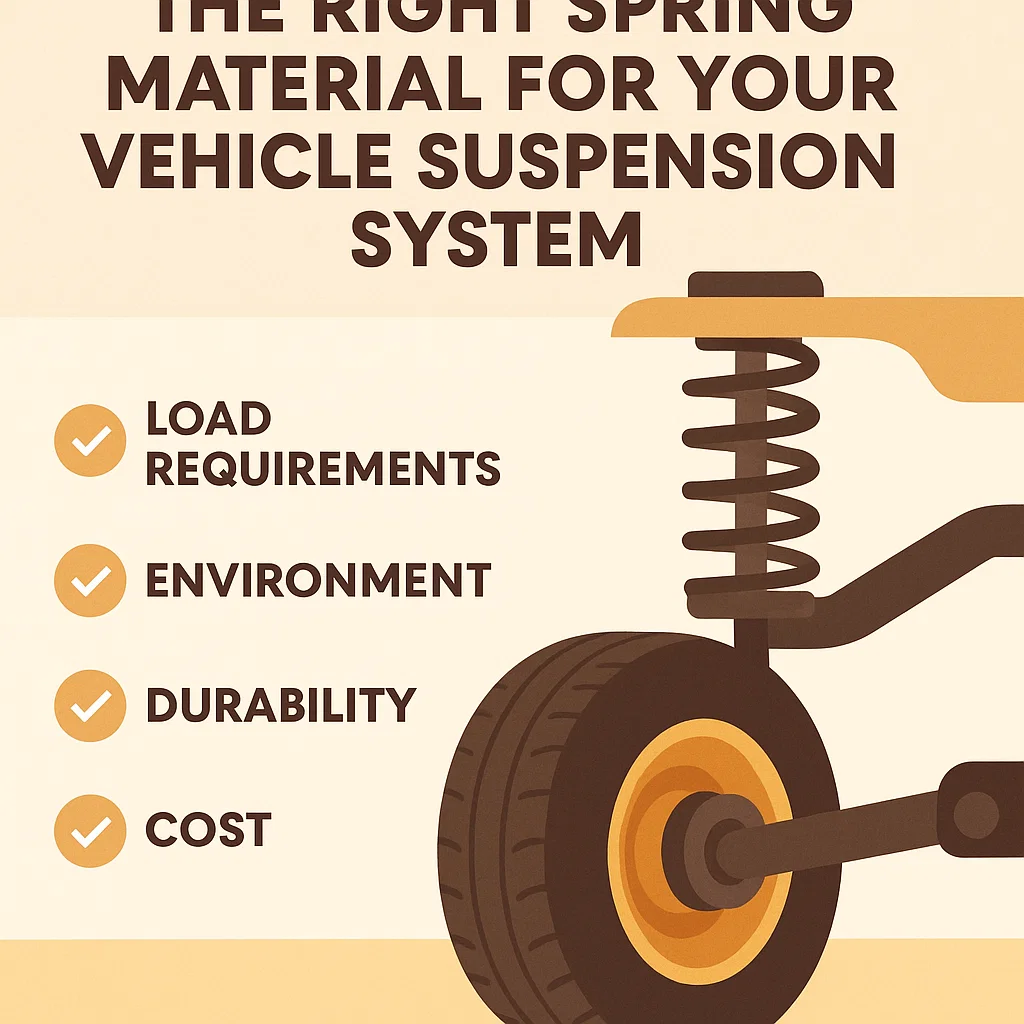
When selecting between leaf and coil springs, consider:
- Vehicle purpose – transport, off-road, passenger, or industrial
- Operating environment – rough terrain, city roads, or factory floors
- Load requirements – payload capacity and frequency of use
- Ride expectations – comfort vs. strength balance
For example:
- Trucks and construction vehicles: Leaf springs for maximum load support
- Passenger cars or machinery with precision motion: Coil springs for smoother performance
Customized Spring Solutions
Our company provides both leaf springs and coil springs, designed and manufactured with high-quality materials such as 60Si2MnA, SUP9, and 50CrVA.
We offer:
- OEM customization for various vehicle types
- Surface finishing (painting, galvanizing, powder coating)
- Rigorous load, fatigue, and deflection testing
Whether you need heavy-duty truck suspension parts or precision-engineered coil springs for industrial machinery, our team can deliver the exact solution that fits your performance requirements.