

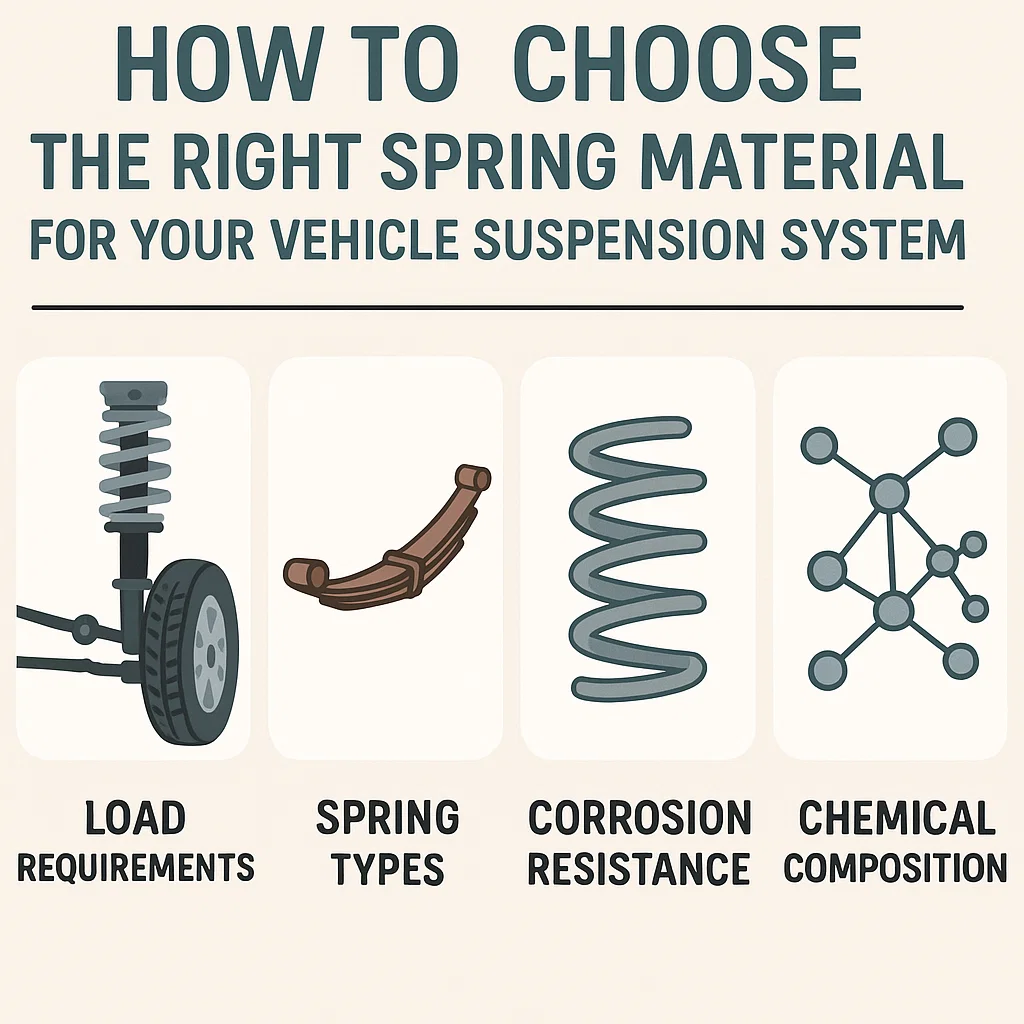
Introduction
Selecting the right spring material is one of the most important decisions in designing or sourcing a reliable vehicle suspension system. The material determines not only how well the spring performs under load but also how long it lasts under repeated stress, corrosion, and temperature changes.
Whether you’re producing leaf springs, coil springs, or torsion bars, understanding how different materials behave helps ensure better ride comfort, safety, and long-term durability.
Why Material Selection Matters
The suspension spring endures constant compression and rebound during every trip. Choosing the wrong material can lead to:
- Premature fatigue failure
- Reduced load-bearing capacity
- Corrosion or surface cracking
- Poor ride quality and noise
On the other hand, the right spring steel provides high tensile strength, elasticity, and resistance to deformation, allowing the suspension to handle heavy loads and rough roads with ease.
Common Materials Used for Automotive Springs
1. 60Si2MnA (Silicon-Manganese Steel)
- Features: Excellent elasticity, fatigue strength, and impact resistance
- Typical Applications: Heavy-duty leaf springs and coil springs for trucks and buses
- Advantages: High load capacity and long service life even under continuous stress
2. SUP9 / 5160 (Chrome-Silicon Steel)
- Features: Outstanding hardness and toughness after heat treatment
- Typical Applications: Suspension systems for commercial vehicles, trailers, and off-road equipment
- Advantages: Superior fatigue resistance and stable performance at high stress levels
3. 50CrVA (Chrome-Vanadium Steel)
- Features: Excellent strength-to-weight ratio and high temperature resistance
- Typical Applications: Performance vehicles, high-speed or heavy-duty coil springs
- Advantages: Maintains elasticity and dimensional stability under high loads
4. 55Cr3 (Medium-Carbon Spring Steel)
- Features: Good mechanical strength, suitable for general-purpose automotive springs
- Applications: Medium-duty vehicles, passenger cars
- Advantages: Cost-effective balance of performance and manufacturability
Other Factors to Consider
Material selection is only part of the equation. The manufacturing process and surface treatment significantly affect final performance.
Key considerations include:
- Heat Treatment: Enhances hardness and fatigue life
- Shot Peening: Strengthens surface and reduces microcracks
- Protective Coating: Prevents corrosion from moisture or road salt
- Load Testing: Ensures consistent elasticity and deflection range
Combining the right material with a precise production process results in a spring that performs reliably over millions of cycles.
Choosing the Right Material for Your Application
When selecting spring material, consider the following:
- Vehicle Type: Passenger car, commercial truck, or off-road equipment
- Operating Environment: Temperature extremes, humidity, dust, or chemicals
- Load Requirements: Maximum static and dynamic load during operation
- Budget and Maintenance Expectations: Balance between cost and performance longevity
For instance, 60Si2MnA is ideal for rugged trucks operating under heavy loads, while 50CrVA is better suited for high-performance or precision applications requiring lightweight strength.
Customized Material Solutions
At our company, we supply custom-engineered leaf and coil springs using a variety of spring steels tailored to specific performance needs.
We help customers optimize:
- Material type and hardness
- Surface finish and coating
- Load and deflection range
- Corrosion protection for regional climates
Whether for OEM production or aftermarket supply, our goal is to deliver suspension springs that combine durability, stability, and cost efficiency.
Conclusion
The performance of any vehicle suspension system starts with the right spring material. By understanding the strengths of each spring steel and applying proper heat treatment and testing, you can achieve the perfect balance between strength, flexibility, and longevity.